Mark and I have big news (if you haven’t already garnered from the title and photo), but we’re expecting our first baby this October! Needless to say, it has been a very busy few months.
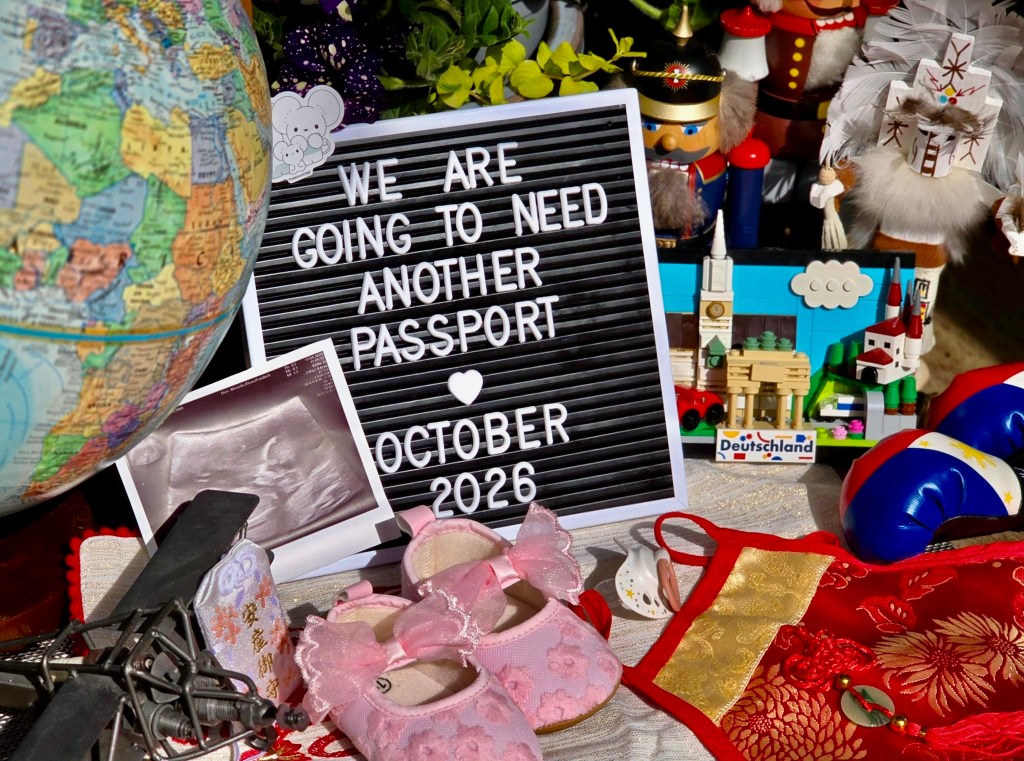
First thing’s first though, we are in the process of navigating the German prenatal healthcare system. This blog post shares a bit about what I have learned and experienced so far:
Delivery Rooms
Mark and I recently attended a birthing abroad class conducted by the Red Cross. We learned that there are four potential hospitals for us to choose from in and around Wiesbaden and Mainz that will admit us for her birth. Two hospitals are focused on high-risk pregnancies (and those delivering before 37 weeks) and two admit people who are low-risk. We have to register with the hospital we plan to use. Unfortunately, there is no way to guarantee a private room to stay in for the two days post-delivery. It sounds like you can pay extra for a private room, but it’s really first come first serve. If none are available, you have to stay for a couple days with another mother who has recently given birth (3-4 days for c-sections).
We were warned there are no privacy curtains, and my recovery roommate will most likely walk around in the nude, except for mesh undies (a cultural thing). Sadly, guests are not allowed to be there overnight in a shared room. I mean, I get it, another woman would not want a strange man there. Nonetheless, I hope we are able to get a private one when the time comes so Mark can stay with me (and the baby if we deliver at a hospital without a NICU/nursery).
The Birthing Process
It sounds like the German system is more progressive than the US in terms of encouraging women to move around during labor rather than being stuck in the stirrups. There are a number of birth positions accepted. Many of the rooms offer a bar across the bed for you to bend over or hold onto. There are even birthing stools to sit on. Each hospital expects you to have some sort of birthing plan decided on before you come in. Most offer a water birthing tub as an option, too, which is not something I had previously considered before. Certain hospitals, not all, allow supportive people like doulas along with your significant other.
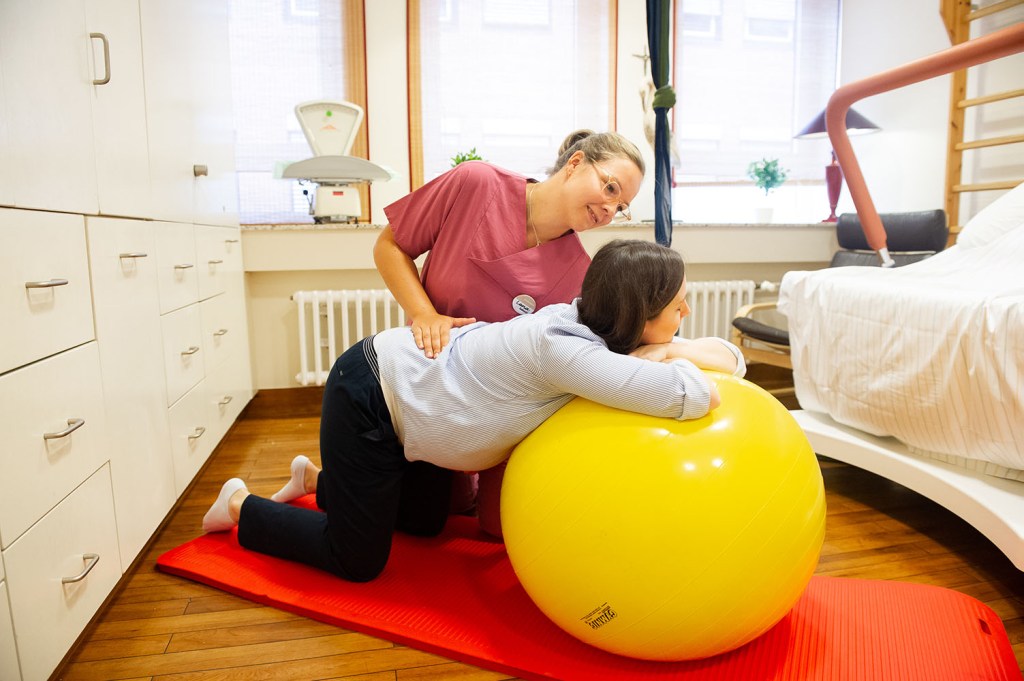
Should you go into labor, the hospitals will not take you (assuming there is no emergency) until your contractions are about five minutes apart with a one-minute duration in between during a one-hour period (5-1-1). I was surprised to learn that if you get an epidural, you can top yourself off with the pain meds at a push of a button. I did not realize you’re hooked up to a machine during an epidural. It is convenient that if the hospital decides you need a c-section, they just use the same machine to inject other meds into you for that. Another option during contractions is to use nitrous oxide.
Also, do not expect your OBGYN to deliver your baby. It will be whoever is working in the delivery room at the time and people will come and go as shifts change. Another interesting thing I learned is that if the birth is taking a while, forceps are not usually used, unless the doctor is ancient. Sometimes they will use a vacuum that attaches to the baby’s head. C-sections are conducted about 30-35% of the time and, horrifyingly, tearing is expected during a first pregnancy. Partners are expected to stay at the head of the table with the mom during a C-section. It’s important that these partners remember to eat and drink throughout the day!
Our upcoming timeline:
- 24-28 weeks – glucose tolerant test
- Make hospital registration appointment for delivery after glucose test
- 28 weeks – nonstress test
- 32 weeks – labwork and immunizations (Hep C, Tdap, RSV, Flu Shot, etc)
- 35 weeks – Group B Strep Test (GBS)
Partners may opt to cut the umbilical cord of the baby themselves if they remember to tell the doctors and nurses. Some wait for the blood to pulse out from the placenta into the baby before cutting. If the parents want to do a cord blood donation, it is up to them to arrange as the hospital will not. If your baby is transferred for an emergency reason to another hospital, for example if the hospital has no NICU and the baby needs to go to one, the mom and baby will be separated. They will not transport you to the other hospital.
In addition, it seems to be down to luck of the draw as to what exactly the hospital will provide during your stay and gift you to return home with. One thing they do not provide for sure is a peri bottle. I was told to make sure to bring extra clothes and a towel to use while I am there.
On German doctors
Doctors in Germany, in my experience, tend to be very blunt, matter of fact, and no-nonsense. The appointments may start late and go by fast. I have learned this is a common experience. You have to be proactive about asking questions and seeking clarification or referrals. Do not expect much handholding or everyone to speak English. I have also heard stories from friends of people being yelled at for questioning their doctors or nurses, so be wary of that.
Fat phobia is prevalent. When I mentioned to my female GP about family planning, she looked me dead in the eyes and said, “One must be super fit to become pregnant.” I remember leaving that appointment feeling very confused and a bit disappointed. Much larger people than me have babies all the time. I mentioned this to another doctor and that doctor assured me that she knew my GP, and that woman is simply a health nut, ha.
On a final note, there is a huge amount of pressure and judgment for mothers to breastfeed. If a mother comes in not wanting to, expect a large amount of push back. To go with this, one cannot use their own breast pumps at the hospital because they cannot guarantee the sterilization level of them. They will offer you ones to use during your stay there.
German Emergency Rooms
I have become acquainted with the ER over the past year we have lived here (not by choice, mind you). The Emergency Room is called the “notaufnahme.” You essentially find your way there and grab a number in the waiting area. You are then checked over by a nurse when it is your turn, and either be admitted to a bed or referred to go somewhere after a swab and/or blood draw. Before that though, you give your insurance info and are told to expect to pay a flat fee (my last one was 500 Euros) that may or may not all be used. If you have private insurance, you will hopefully be reimbursed. If you are at the ER late at night and are sent to another area of the hospital, good luck finding your way there in the dim lighting. If you are lucky, there might be someone along the way lurking in the dark to direct you, but I have had a few creepy late night walks from one wing to another to find the “Kreißsaal” or delivery ward without running into a soul.
Note that family members are not allowed to hang out with you in the actual ER if you are admitted to a room. I was upset about this, and it made for a VERY boring nearly overnight stay. It was no fun struggling back and forth from the bathroom with an IV bag and having to listen to an old man moaning loudly down the hall. Thankfully all went well, otherwise.
Pregnancy Culture
Overall, Germany is child-friendly in terms of providing accommodations for parents in restaurants and public transit. Most restaurants provide high chairs and many bathrooms offer a changing table (even in the men’s). Women breastfeed wherever without stigma. Buses have a designated area for strollers, and some long-distance trains have a train car specifically for families with children. I only wish I could have the German maternity leave. I have a friend “working on the economy” in Germany that is able to take up to three paid years if she wished. I keep telling myself three months is better than nothing, but America needs to catch up.
Many drug stores surprisingly offer a selection of infant food, diaper supplies, and clothes! Some stores like Rossman and DM offer a FREE welcome baby bag if you register for their app (see pics below for what we received in ours).
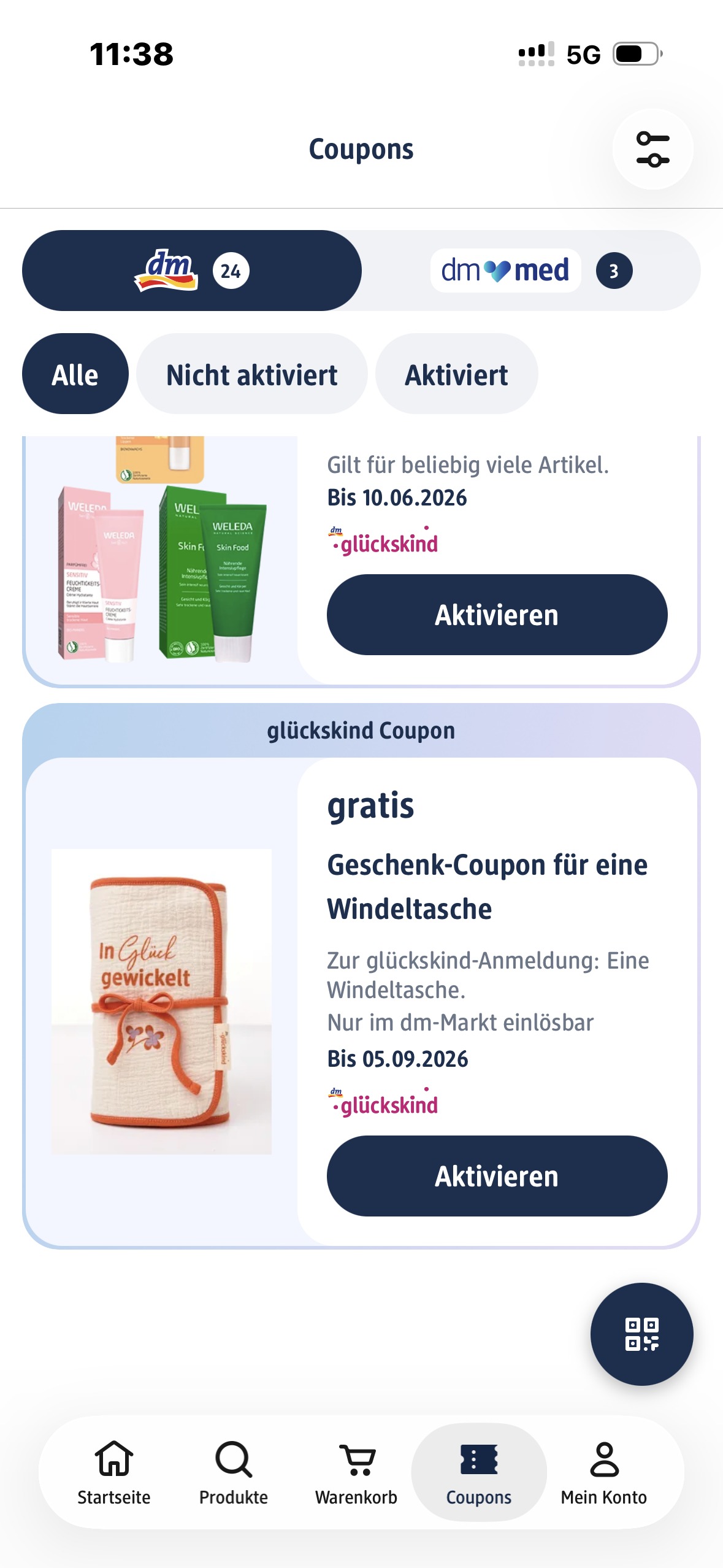
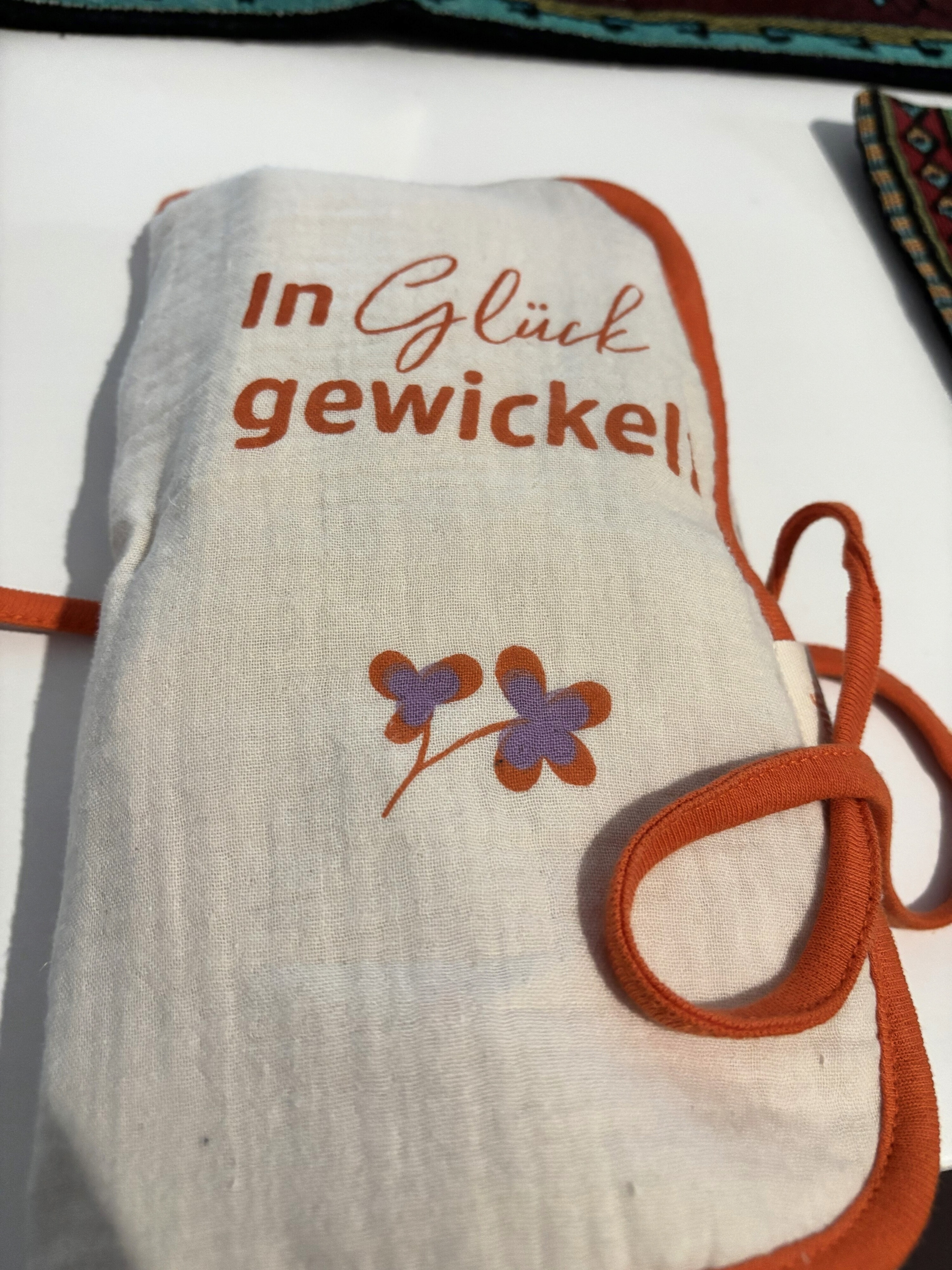
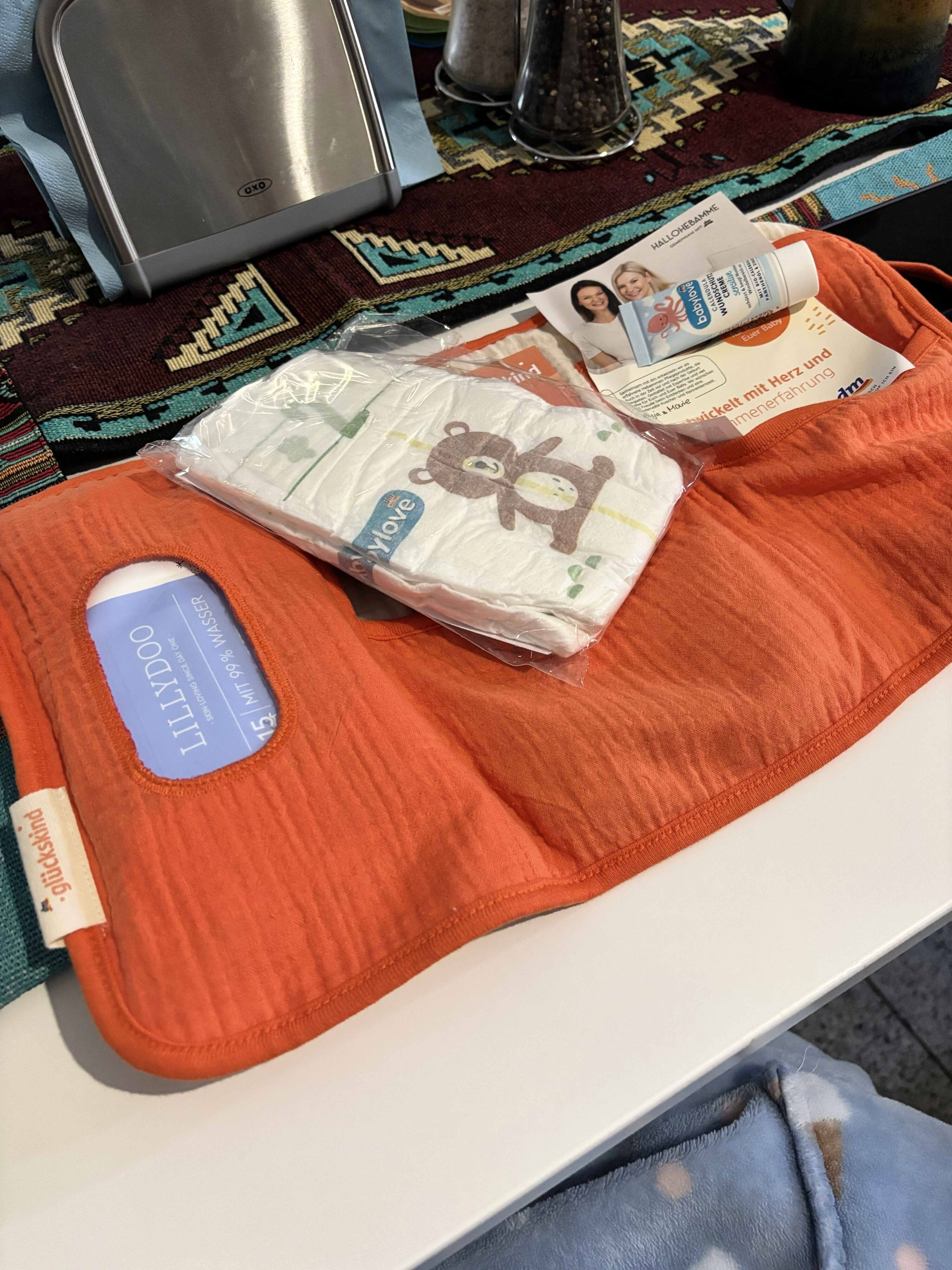
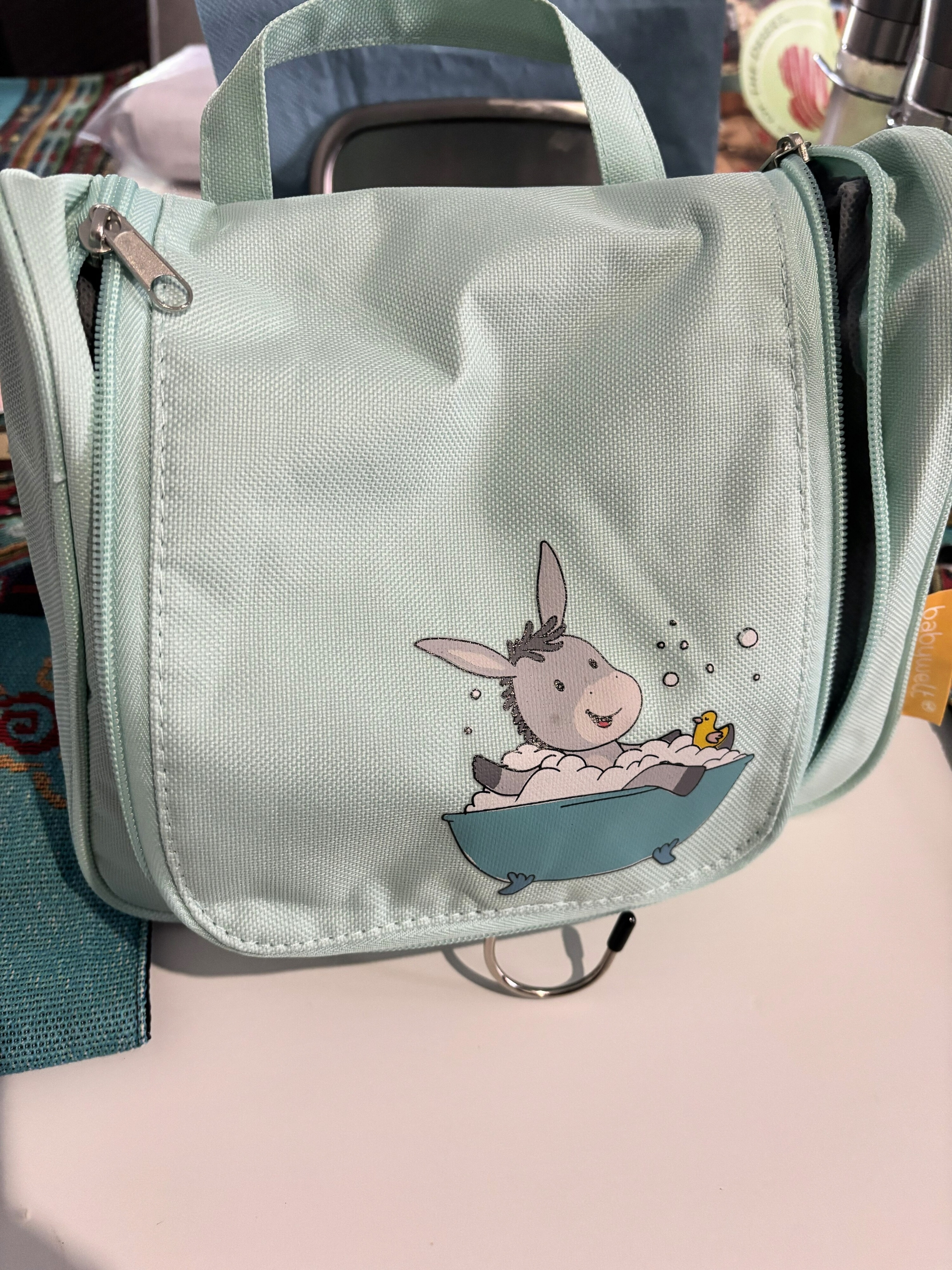
The only downsides I have found (and this refers to Germans in general), but if you’re pregnant, don’t expect people to offer you a seat on public transport or move aside for you to pass by. You really have to speak up and force people to give you space. You also have to protect yourself. I have even seen a pregnant woman be shoved aside while alighting from the bus!
Also, side walks are not your friend here if you have a stroller. Expect narrow side walks and bumpy roads. Please, do not bring your stroller during the Christmas market season. Expect to inconvenience yourself and everyone else by having to push it through throngs of slow-moving people. Put your baby in a baby carrier on your chest if you want to go to the Christmas markets. I was told last week by a mom that her baby carrier had a little seat that she used as a tiny table when she took her baby. What an idea!
Looking Ahead


Yesterday, we celebrated reaching the halfway mark – Week 20!! We are very excited to welcome our baby girl. Thankfully, we will be doing so in a country where medical care is much cheaper, and the process is fairly streamlined. We plan to sign up for a few more classes on breastfeeding basics and newborn care. We also plan to schedule a home visit with a nurse to double check our nursery and supplies and try to find a local English-speaking doula.
Additionally, aside from growing a tiny human, I recently completed a very interesting college course on early childhood literacy. I am excited to foster a print-rich environment for our little girl. If anyone’s interested in this subject, I highly recommend Maya Payne Smart’s book, “Reading for Our Lives: The Urgency of Early Literacy and the Action Plan to Help Your Child.”

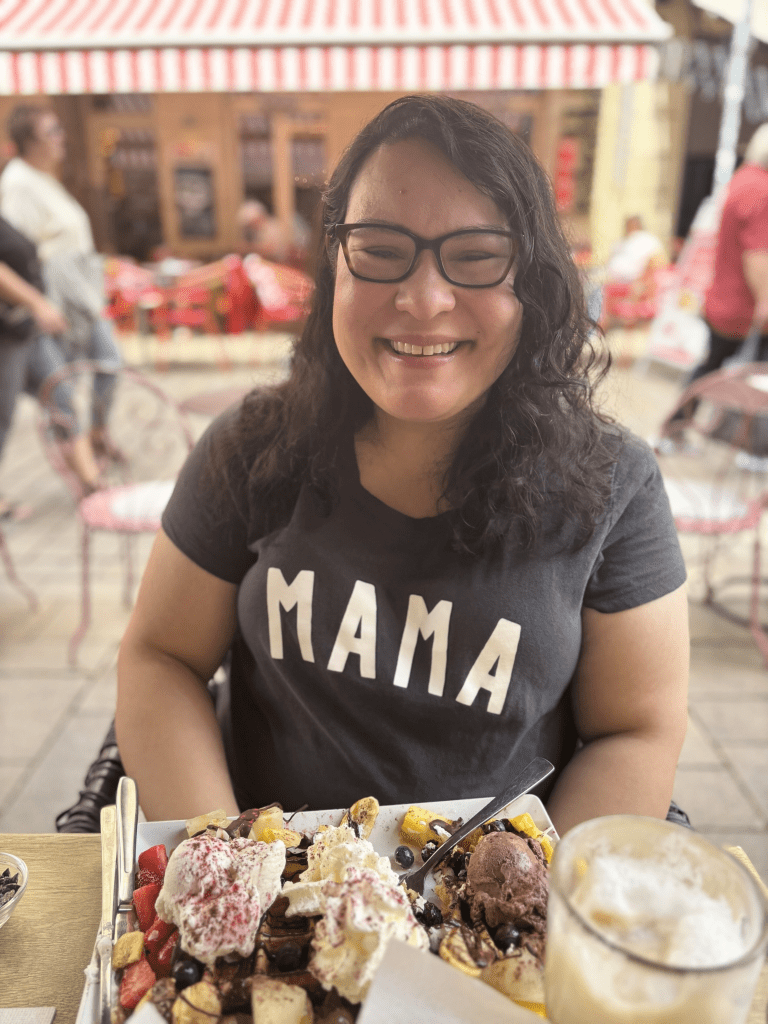
In other news, we are packing at the moment for our 10th wedding anniversary trip to Rome. I am so stoked! It’ll be our first time in Italy. I am a bit nervous about hiking around in the heat while pregnant. I expect I will just have to take it slow. Wish us luck!
Until next time,
Steph ❤
PS. I’m debating switching platforms to Substack from WordPress. If I do, I’ll be sure to let everyone know if I do close this website.


