The animal is puzzling. It does little to merit its popularity. In the wild, it spends all of its waking time wandering aimlessly to find food. Though it is a carnivore, there is little game where it lives, and the panda is not quick enough to catch it anyway. So it eats bamboo, and since its digestive system is not intended to break down plant matter efficiently, it must eat enormous quantities to stay alive.
Michael Kiefer, 1990 Sandiego Reader
I’d read recently an article about the hardships Ruth Haskins and her American Chinese guide, Quentin Young, had in bringing back the first live panda to the US in the 1930s. Their stories of tracking China’s “national treasure” are entertaining and hard to fathom in this day and age of modern technology. Binge reading about their exploits, and those of others like Teddy Roosevelt’s sons who’ve expended much effort in trying to find these elusive bears, reinvigorated my dream to see the animals in their home province.
Before this trip, I’d seen pandas previously at the Beijing Zoo and at the National Zoo in Washington, DC. The panda enclosure in Beijing was incredibly sad back when I went in 2010 – basically a pit surrounded by a fence. I witnessed visitors throwing trash at the lone panda. It was a heartbreaking sight, as were the dismal conditions of other animals in captivity there…I wanted to go to the Chengdu Giant Panda Research Base, in part, because I heard they were much more humane in their care of the pandas. I wasn’t able to go last year, but when I came across round trip airplane tickets to Chengdu for under $200 this year, it felt like the stars aligned, telling me that this was my chance to finally visit Chengdu’s most famous Panda reserve.

Pandas are native to the forests of Sichuan, Shaanxi, and Gansu Provinces. As of 2017, there are about 1,864 giant pandas living in the wild in China, 70% of which are distributed about sanctuaries in Sichuan Province (designated a UNESCO World Heritage site in 2006), and more than 225 currently living in captivity. Besides the Giant Panda Base, there are three others around Chengdu: Dujiangyan Panda Base (one may volunteer here), Bifenxia Panda Base (the largest), and Wolong Panda Research Center.
Getting here
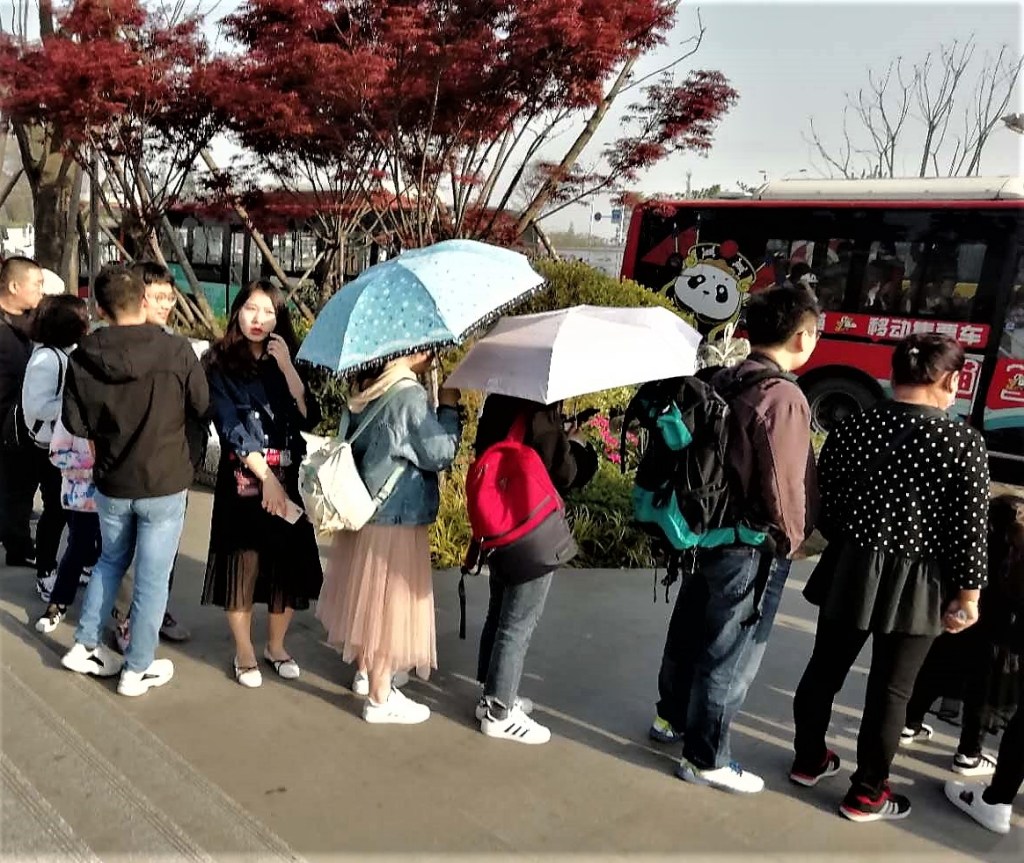
I took Line 3 on the Chengdu Metro to Panda Avenue (熊猫大道站). Outside Exit A, about a 100 meter walk, there’s a free bus stop “DiTie XiongMao DaDao” that’ll take you to see the pandas. One may also take bus 198A. Take the bus going towards “YinXingYuan GongJio” and then get off at 8th stop named “Xiong Mao Jidi (熊猫基地站).” The Base’s official website has more options for those wanting to come by bus from elsewhere in town.
I ended up taking a Didi (Chinese Uber) right outside the metro to the main gate of the Base as the free buses right outside the metro were insanely packed and had long queues. I would recommend not coming on a holiday or weekend, if you can help it!
Entry into the Base is 58 yuan ($10) and free for children under 1.3m (4.3ft). I’m told it’s a bit cheaper to buy your ticket online. Yet, funny enough, the line for those who buy the tickets in person was much, much shorter when I went, so I got into the park fairly quickly after buying the ticket at the counter.
Opening hours of the Base are 7:30am to 6pm April through October and 8am to 5:30pm November through March.
The best time to go is between 9am and 10am as pandas are more active for breakfast and then tend to nap after.
The Research Base
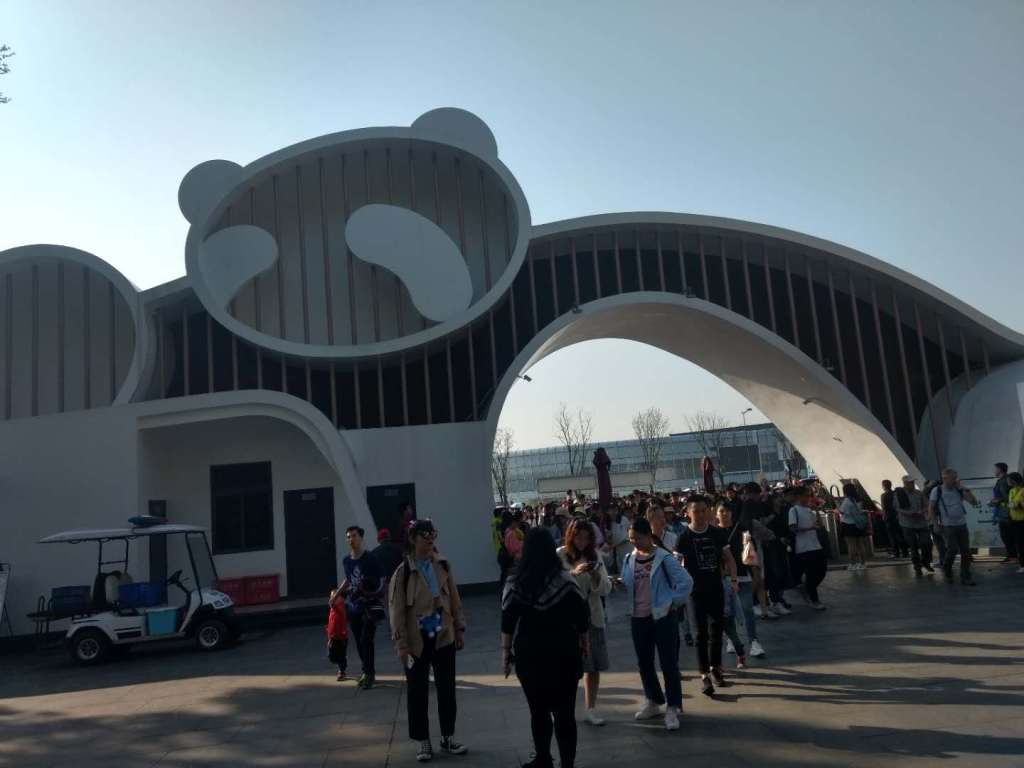
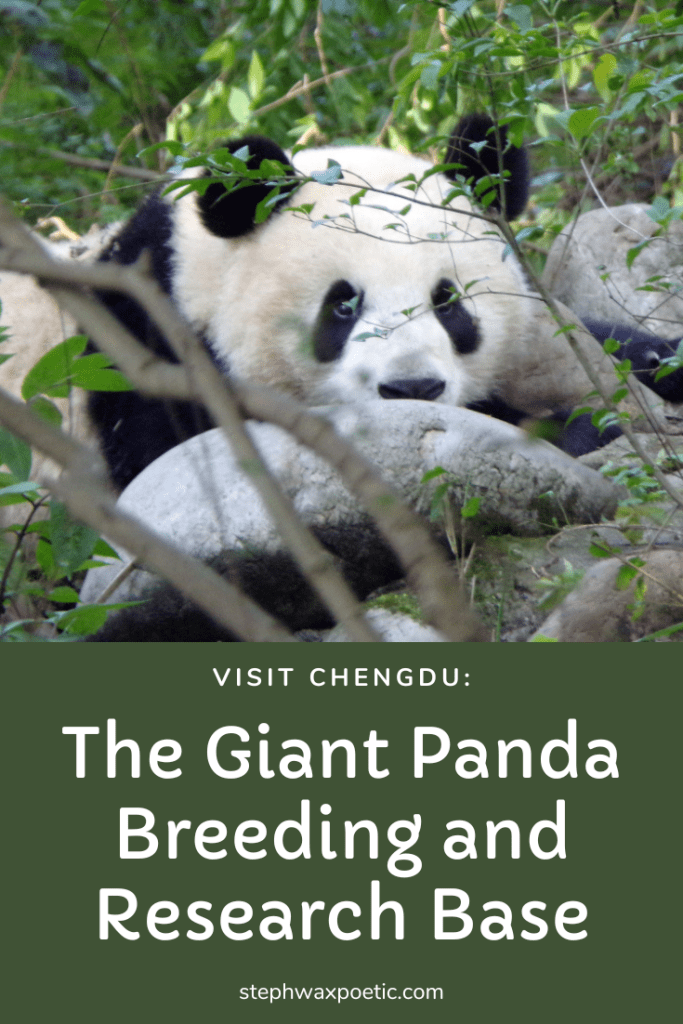
The Giant Panda Breeding and Research Base (大熊猫繁育基地) in Sichuan Province is one of 40 official panda reserves in China and is home to about 120 giant pandas. It started as a non-profit research and breeding facility back in 1987 with just six pandas. In 1993, the base opened its gates to the public to spread public awareness of about endangered animals and the environment. It consists of 92 acres, but is set to expand to 500 more acres in the future. It’s pretty awesome that they’ve birthed over a hundred pandas through the years!
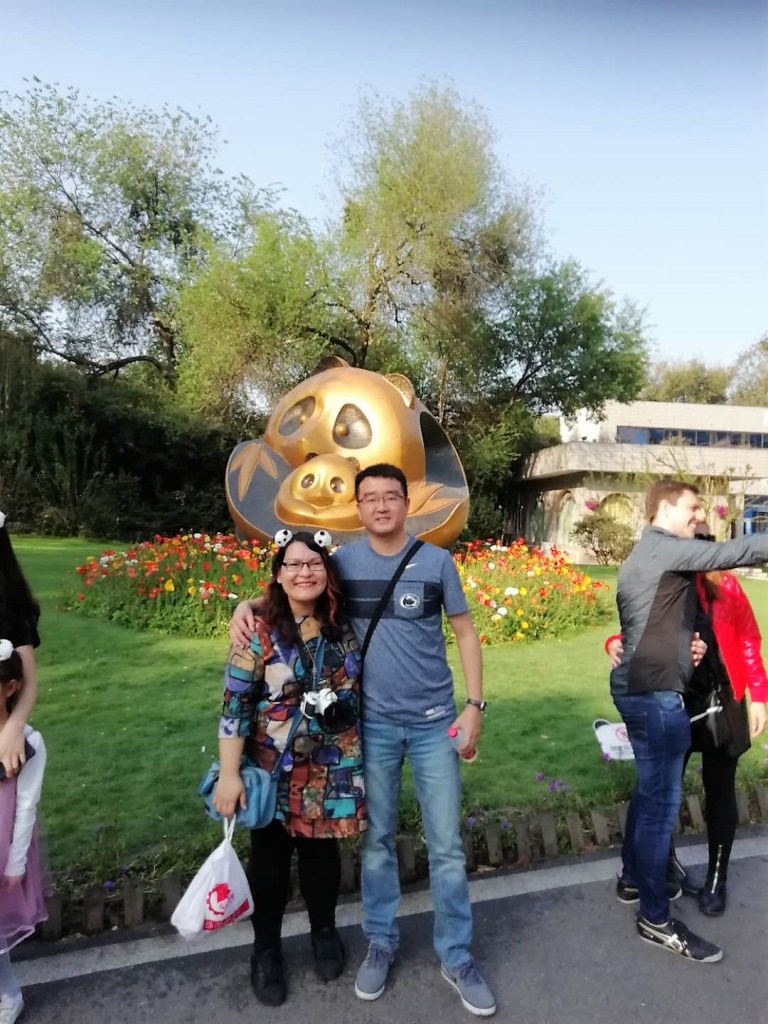
The base is located 18 km (11 miles) north of Chengdu’s city center and focuses on maintaining an optimal environment that simulates the natural habitat of pandas with the ultimate goal of encouraging population growth. They also treat injured or sick pandas. Other endangered species are raised here, too, including red pandas and black neck cranes.
It was a bright hot, sunny day when I visited over the Qingming (Tomb Sweeping) holiday last month. The Base itself was beautiful, with bamboo stalks (over 10,000!) and flowering trees walling off the walking paths. I was a bit disappointed, though, expecting it to be less crowded as people are supposed to journey to clean family tombs on that holiday; I learned later than many families now clean tombs early in order to have free time for themselves on this day off.

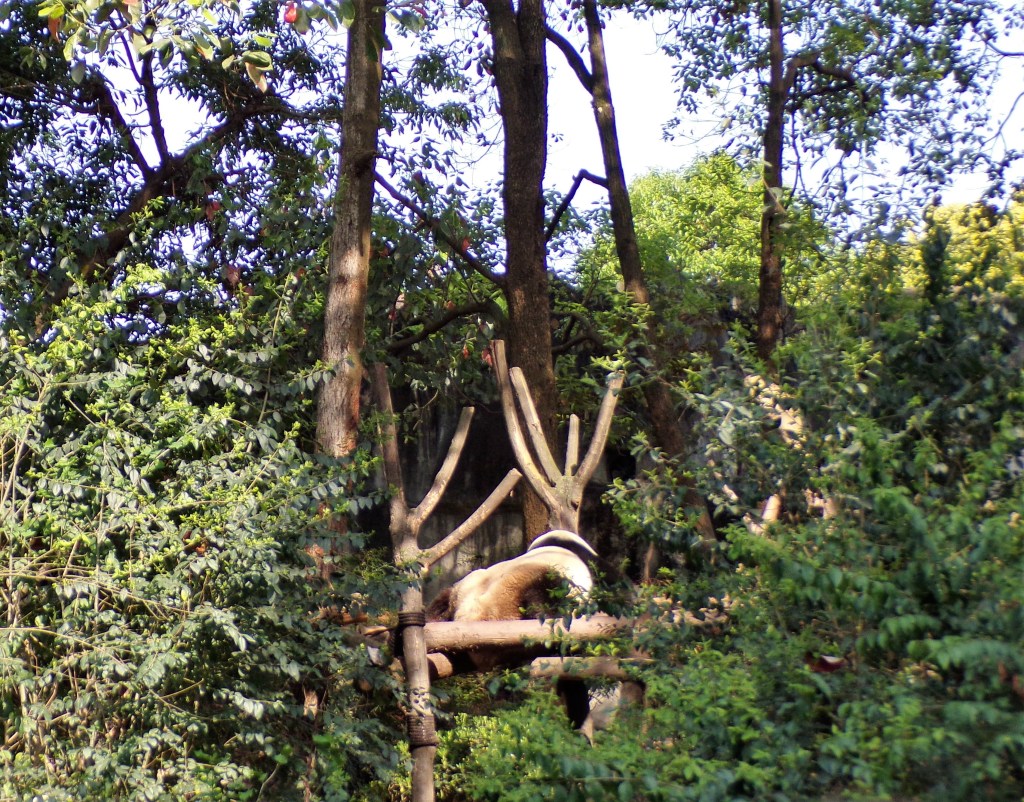
The panda enclosures still felt like a zoo, but were pretty open and spacious. One could see the animals eating, playing with each other, and sleeping the day away. I got to witness a bunch of pandas eating bamboo, small adolescent pandas climbing trees, and even one cute giant panda falling and rolling downhill (twice!).
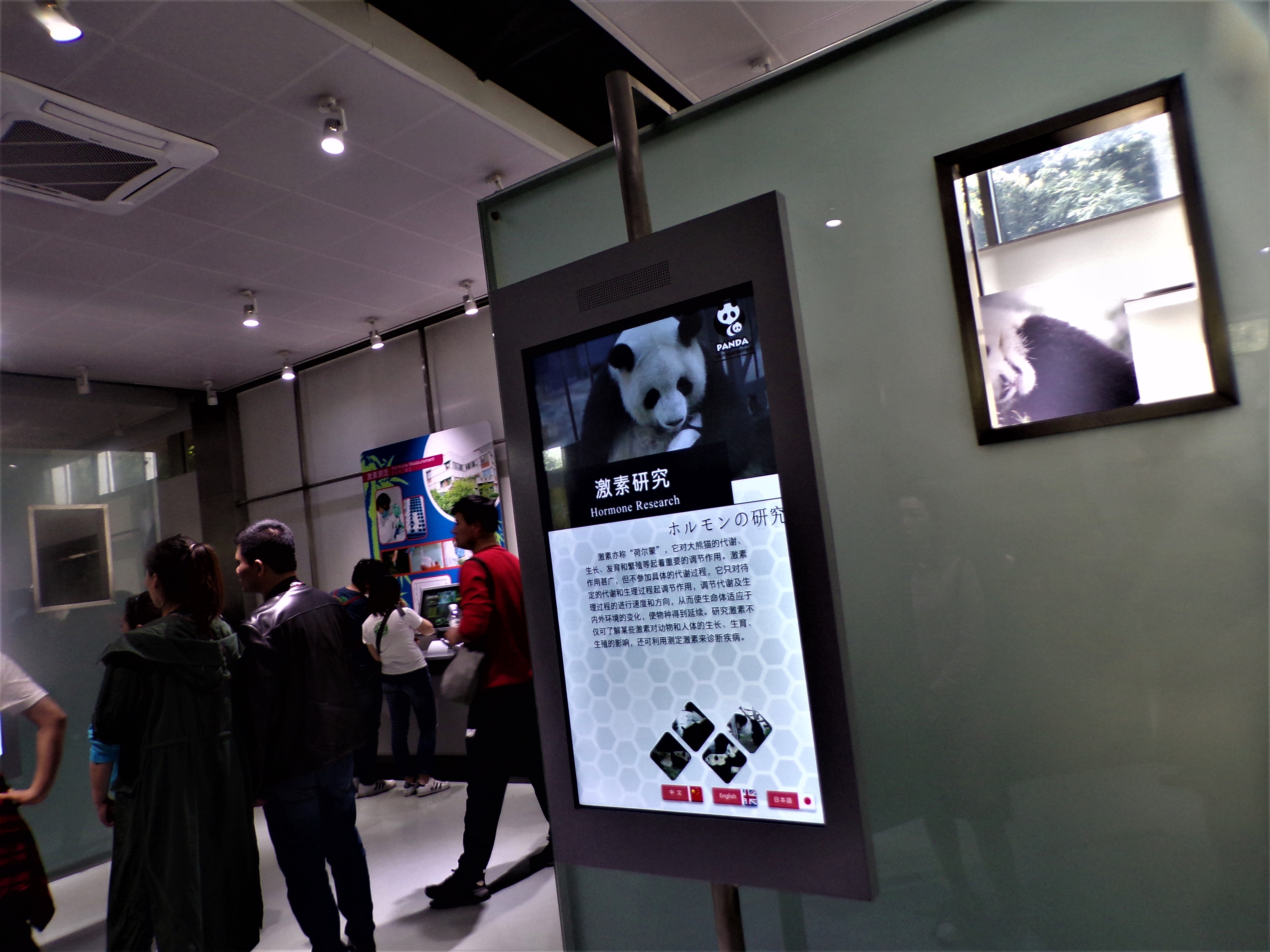
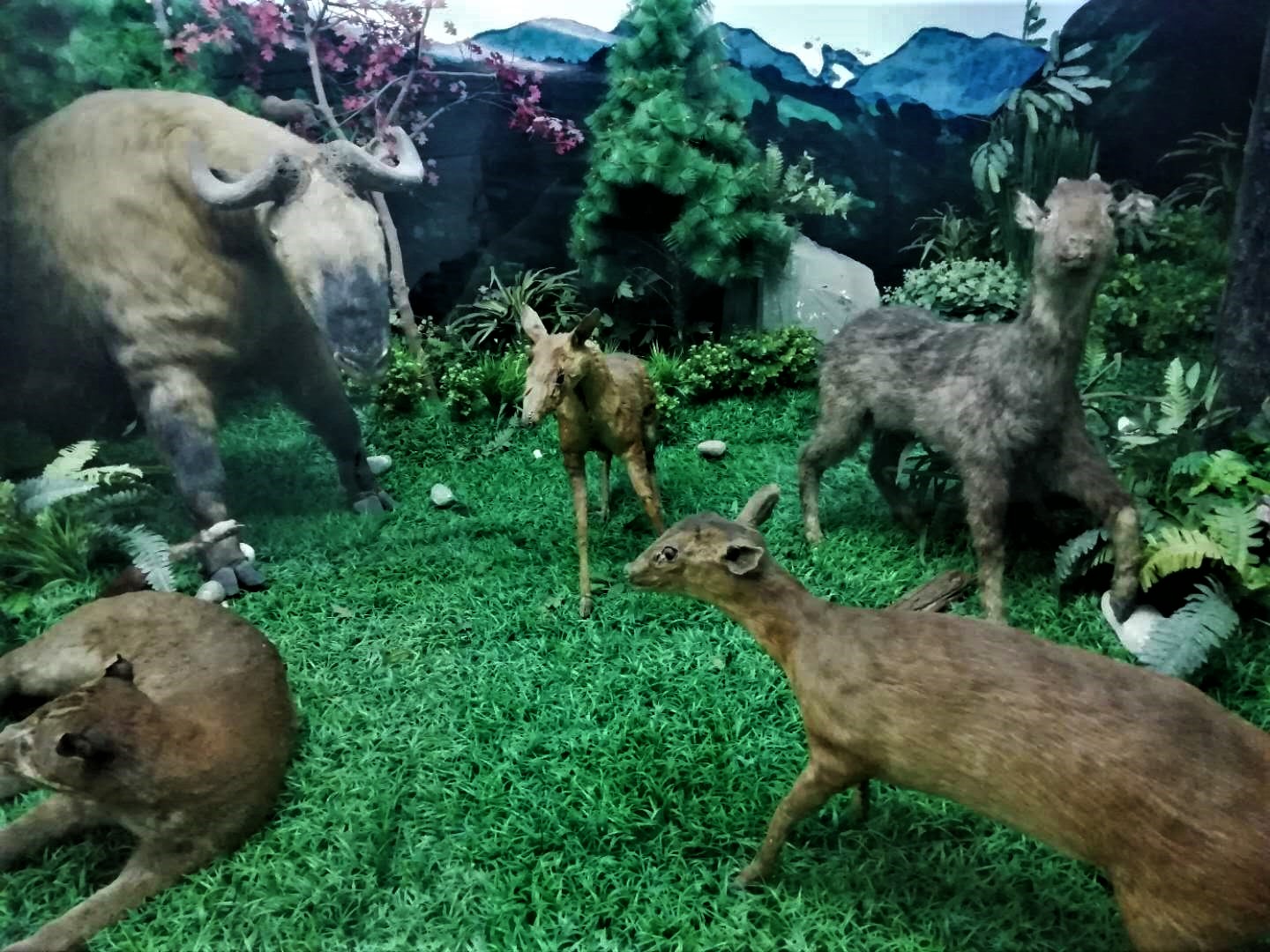
Aside with the animal enclosures, one may visit the museum and research facility. Inside the museum are three main exhibits: in the Giant Panda Hall, the Butterfly Hall, and the Vertebrate Hall. There is the usual wacky examples of bad taxidermy found at most Chinese museums and detailed explanations of the formation of Sichuan Province’s biodiversity.
Overall, I’m glad I finally made it out to the Giant Panda Base! The only venue I wasn’t able to visit was the “Sunshine Nursery” for baby pandas since it was so crowded. I’m not sad, however, as new born pandas kind of weird me out (they look too much like naked mole rats at that stage). I also didn’t hold a panda – so expensive! It’s around $300 dollars plus you have to bring an official health examination form. I’m content to just watch them from afar.




Fun facts I learned about pandas:
- Pandas are technically carnivores, but bamboo can constitute as much as 99 per cent of their diet. In the wild, pandas will occasionally eat meat in the form of birds, rodents or carrion.
- They must eat from 26 to 84 pounds bamboo every day! a formidable task for which they use their enlarged wrist bones that function as opposable thumbs.

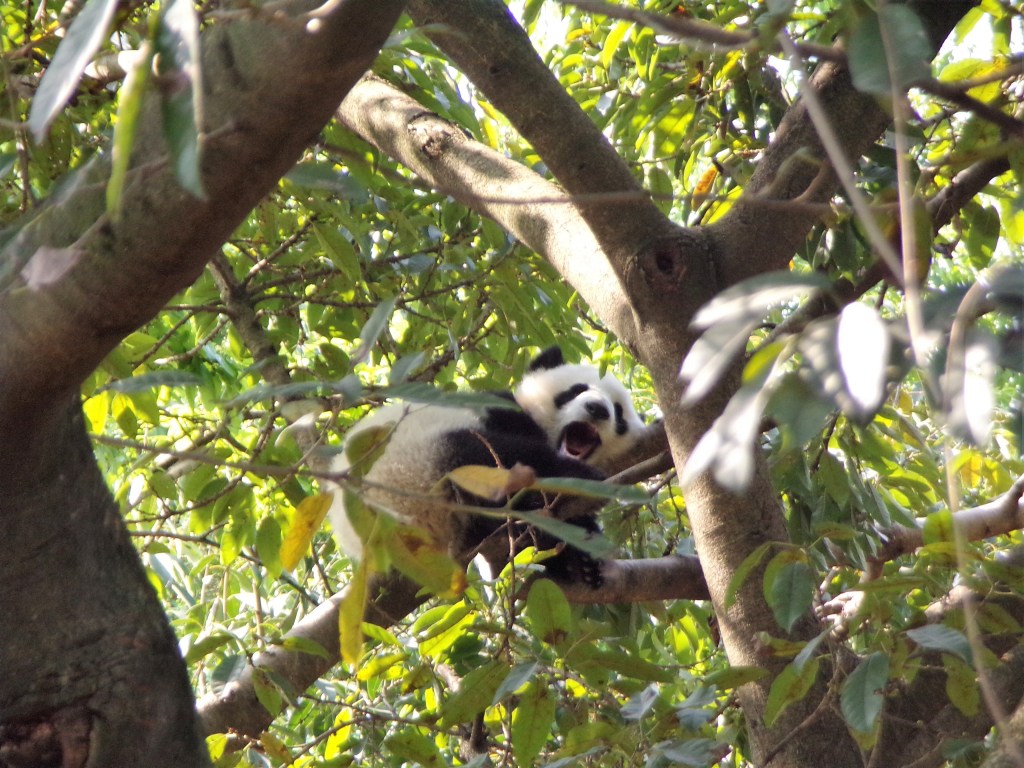
- Since, pandas do not hibernate, they never make permanent shelter abodes and instead, prefer changing their nesting grounds. They sleep in the hollows of trees or tiny caves. They also try to keep moving higher up in altitude as and when it gets warmer.
- It’s also really difficult for male and female pandas to actually commence the act of mating as female pandas only ovulate once a year. Not only that, but the window that a male panda has to inseminate the female while she has an egg ready to go is only about 36 to 40 hours.
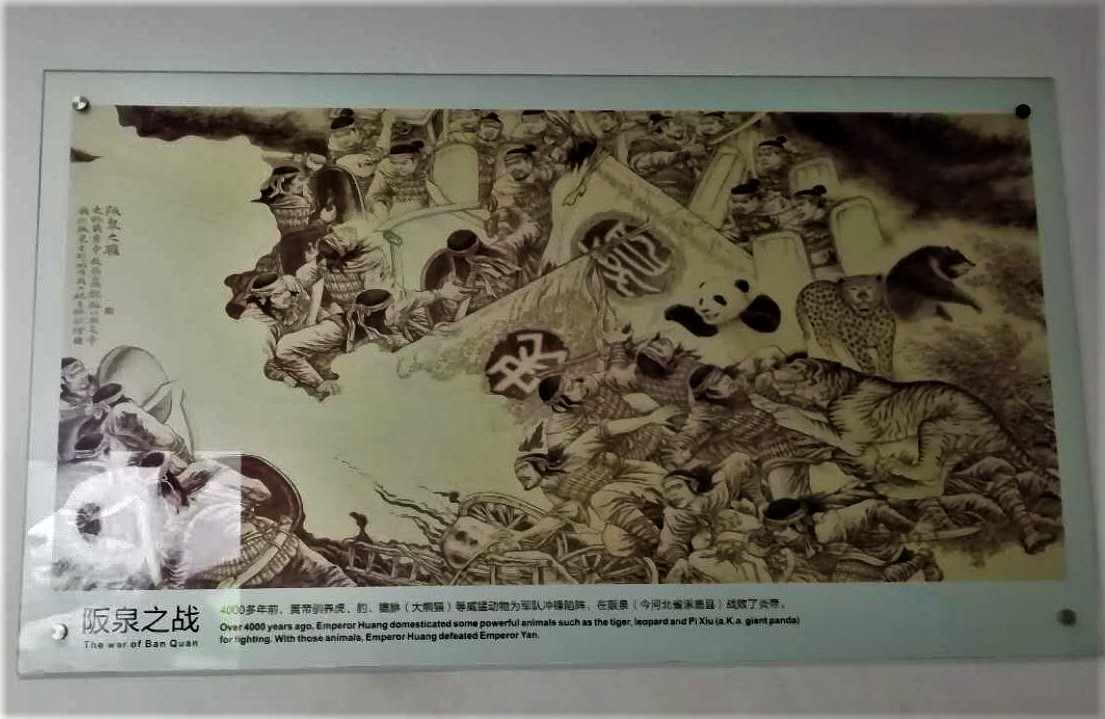
- A “normal” reproductive rate is one offspring every two years, and female pandas are only fertile for 2-3 days a year. It’s no wonder so many early conservation efforts failed (for lack of species understanding).
- Artificial insemination of female pandas has them splayed out on their backs.
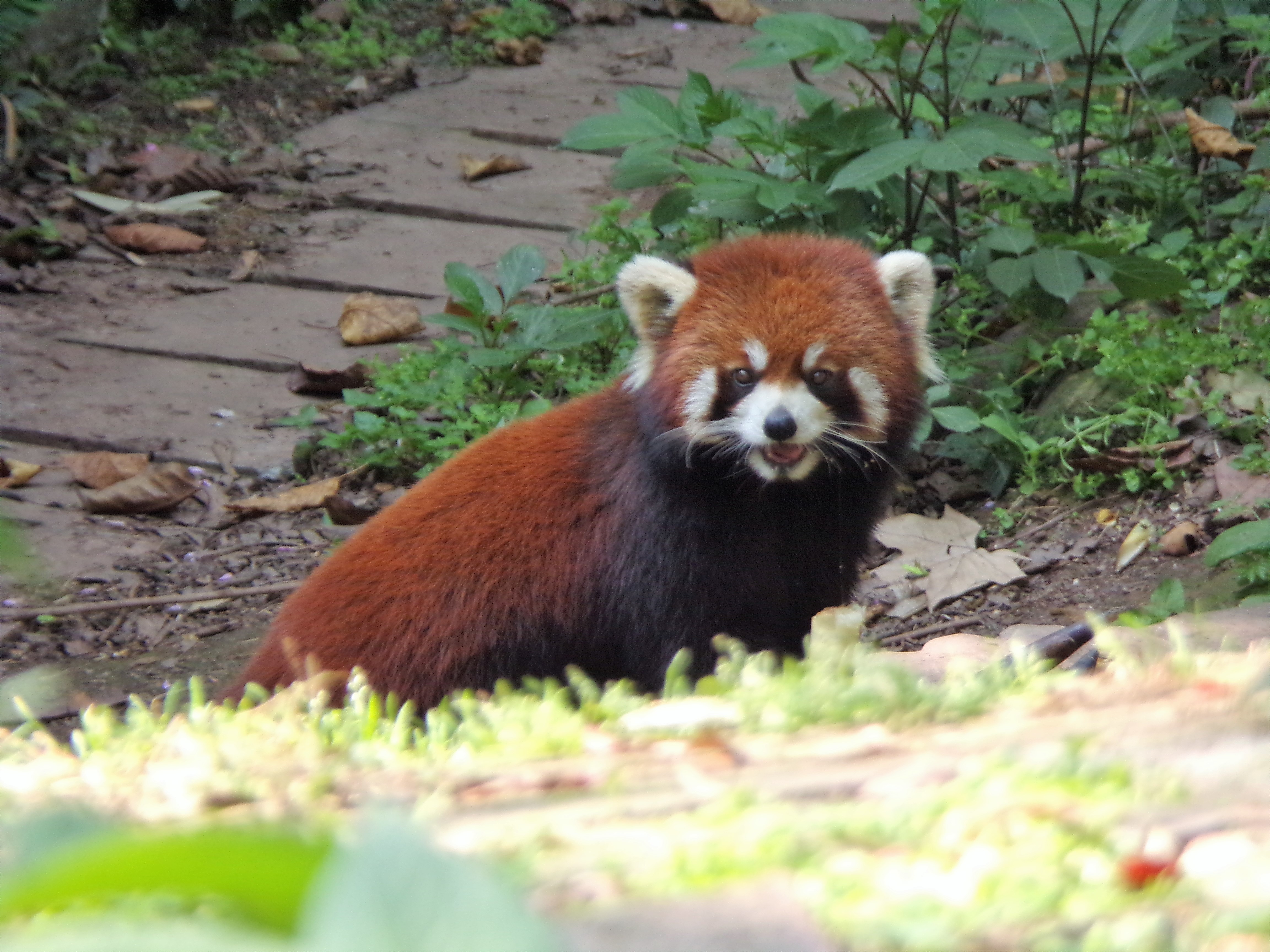
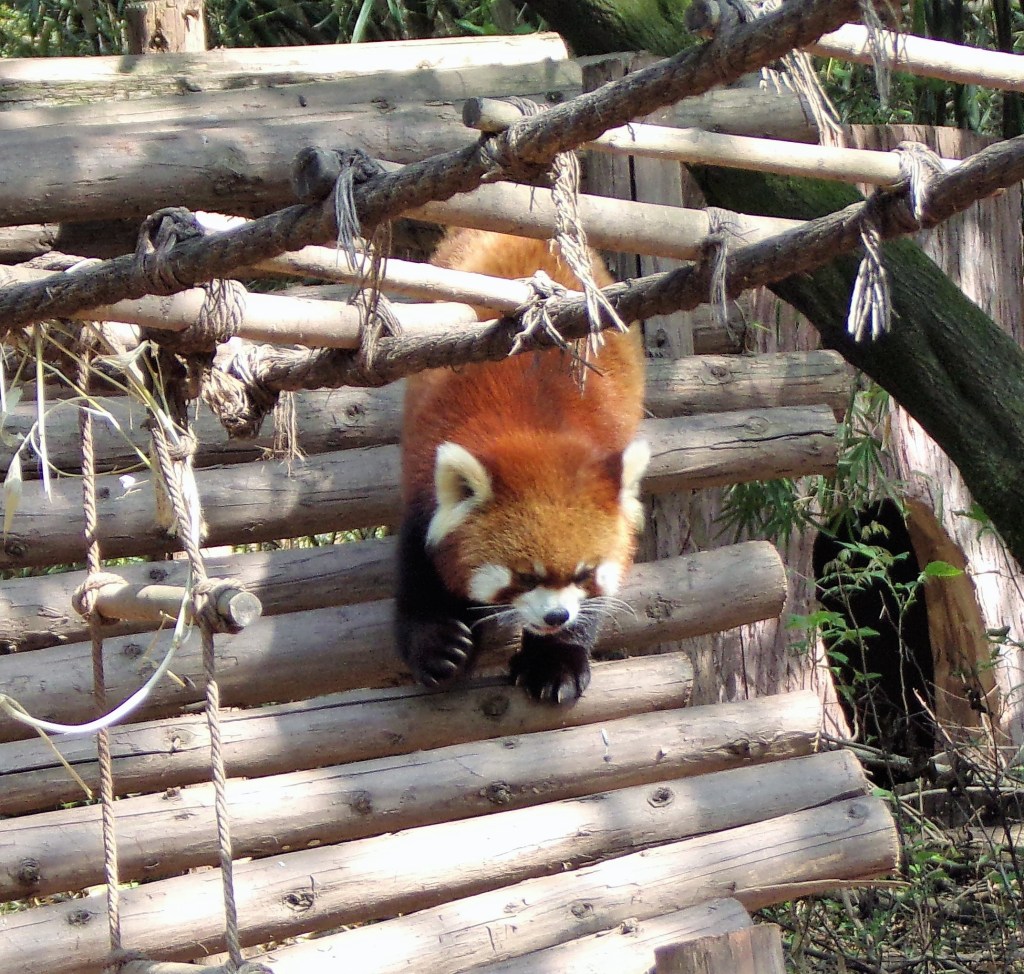
- While the modern red panda territory extends from central China into the Eastern Himalayas and on towards Nepal, the first red panda fossil was found in the United Kingdom! In 1888, a fossil molar and lower jaw of a cougar-sized red panda was discovered. More fossils have been found in Spain, Eastern Europe, and even the United States. Around 5 million years ago, Tennessee was home to a giant red panda that probably went extinct with the arrival of raccoons.
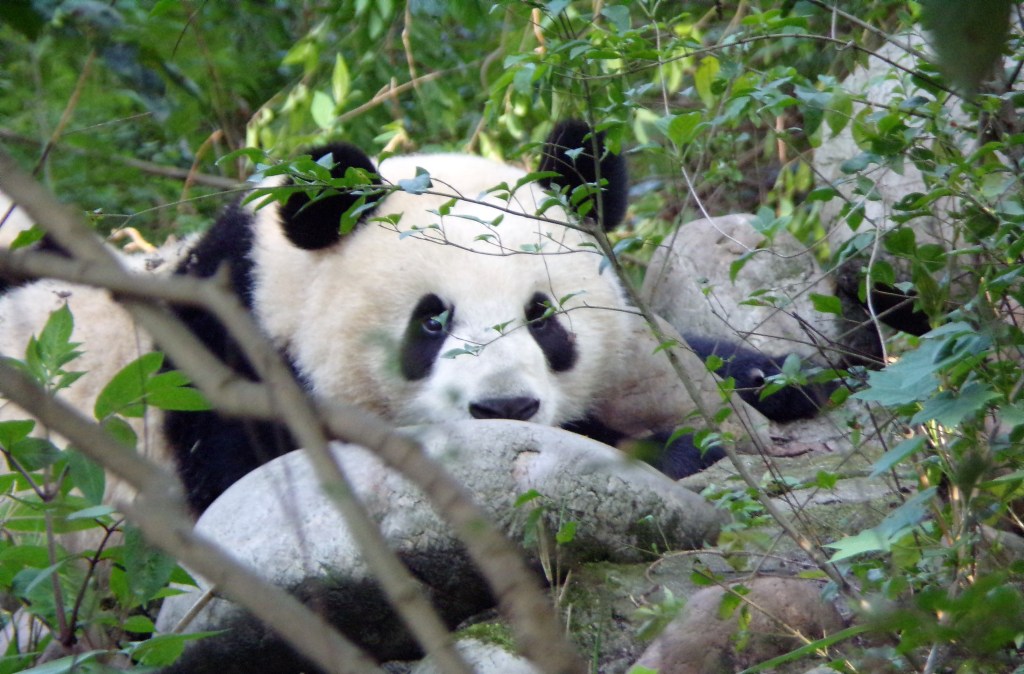
- A newborn giant panda is about the size of a stick of butter—about 1/900th the size of its mother—but can grow to up to 330 pounds as an adult.
- Pandas are pigeon-toed; in other words, they walk with their front paws turned inward. From what I’ve witnessed, they run rather fast!
Great news!
They’re no longer on the endangered species list! As of September 2016, the International Union for the Conservation of Nature downgraded the species to “Vulnerable.”
– Robert Frost
Like this story? Feel free to pin it!
Similar Posts

Crayfish (小龙虾) in China: A Popular Dish with a Corpse-Eating Past?
Everywhere I went, it seemed as if people of all ages were waiting in agonizingly long lines outside popup crayfish-themed restaurants. Advertisements claiming “exclusive new innovative fresh” crayfish dishes plastered shop windows. Limited edition crayfish-flavored snacks replaced the regular Lays, Pretz, and Pringles chips at my grocery store, and even KFC was jumping on the…


The Fake International Taekwondo Tournament, A White Monkey Job Story
Confused, we looked at each other and felt a sense of growing apprehension. Yet, it was only when the first of many children started filing in (and we were told to hand out the medals and certificates and pose for pictures) that it truly dawned on us: we weren’t invited here to be a part…

Bayberries (杨梅): An Intriguing Sweet and Sour Fruit
Chinese bayberries are fascinating. Striking the perfect balance between sweet and tart, these berries have long been an inspiration for ancient Chinese poems and legends.
To commemorate bayberry season, I have taken a closer look at this refreshing summertime fruit, including its origins and fun facts, and the hysterical story of the Bayberry Swindler.…

Cùn: The Chinese Inch (寸)
Units for measurements around the globe developed from what was easily available, namely body parts. For instance, hands were used to measure the height of horses, human feet for distance, and even the average length a physicist’s beard grows in a second was once used to measure extremely short distances (around 5 nanometers). An inch…

The Magic of Bad Chinese Taxidermy
No matter the size of a Chinese city, if it has a museum, chances are high that one is sure to find some funky-looking dead animals there!
Countdown to Beijing
In what feels like a lifetime and countless cups of late-night coffee later, I’m now set to return to China on the first of November barring I don’t test positive for Covid three days before my flight!

A Day Trip to Tianjin天津
A port city metropolis situated along the Bohai Sea in Northern China, Tianjin is China’s largest coastal city and currently ranks fourth largest in urban population following Shanghai, Beijing, and Guangzhou. Meaning “heavenly ford” or “the place where the emperor crossed the river,” Tianjin has historically been the maritime gateway to the nation’s capital of…

Forward and into the Fray
Still alive and taking it week by week, because what other choice is there?

Online Teaching: Big Drama on Day One
Here we are into the initial days of the 2020 spring semester during the Covid-19 virus outbreak. As my colleagues, students and I are stuck across the globe, we are diligently trying to follow the directives of our higher ups to comply with the government’s solution: e-classes over Wechat. Imagine trying to teach courses over…

Ikea in China: Where Locals Come for Selfies, Picnics, and Some Z’s
Ikea in China has become synonymous as a place for all-day family outings, to the frustration of its workers and the amusement of expats expecting a “normal” Ikea shopping experience.

Happy Mid-Autumn Festival! 中秋节快乐!
I often liken the Mid-Autumn Festival to Thanksgiving in the USA, but Mid-Autumn festival has more similar counterparts in Korea and Japan (with the Chuseok and Tsukimi holidays). During this holiday in China, family members will cook and eat traditional foods, watch tv together, and enjoy the full moon.

The Incredible Leshan Giant Buddha 乐山大佛
The Leshan Buddha, fondly called, “Da Fo” or Big Buddha (大佛), is an amazing feat of ancient architecture and manpower. Carved into the side of Mt. Lingyun, the colossal statue at 71 meters tall (233 feet) stands over 1,300 years old and is considered to be the largest stone Buddha in the world – by…

Chengdu 成都: The “Special Flavor” of Sichuan food
Sichuan spice is no joke. Sichuan peppercorns are known for their mouth-numbing properties, while a plethora of other spicy ingredients can have sweat and tears running down your face. Thankfully, not all Sichuan-style dishes are so volatile, though! For those with lighter palates, Sichuan food can also be sweet, savory and refreshing.
Chengdu 成都: Land of Abundance
As the saying goes, those who enter the Sichuan area of China are susceptible to the persuasive charms of the lifestyle there: the slow-paced rhythm of work, the pleasant climate, the mouth-watering cuisine, the sounds of mahjong being played into the night…

Anniversary Sirens for the Great Sichuan Earthquake
I woke up this morning to an air raid siren and a woman’s voice issuing a countdown. Groggy and confused, I wondered if we were under attack. I looked out the window and saw cars driving down my busy intersection and figured that it must be a practice signal, like they do with the Amber…
 Stephwaxpoetic
What a dream trip. To see Pandas would be a dream come true.
LikeLiked by 1 person
They are incredibly cute! I would try to come on an off-season trip if you can. Holiday weekends are much too crowded.
LikeLiked by 1 person